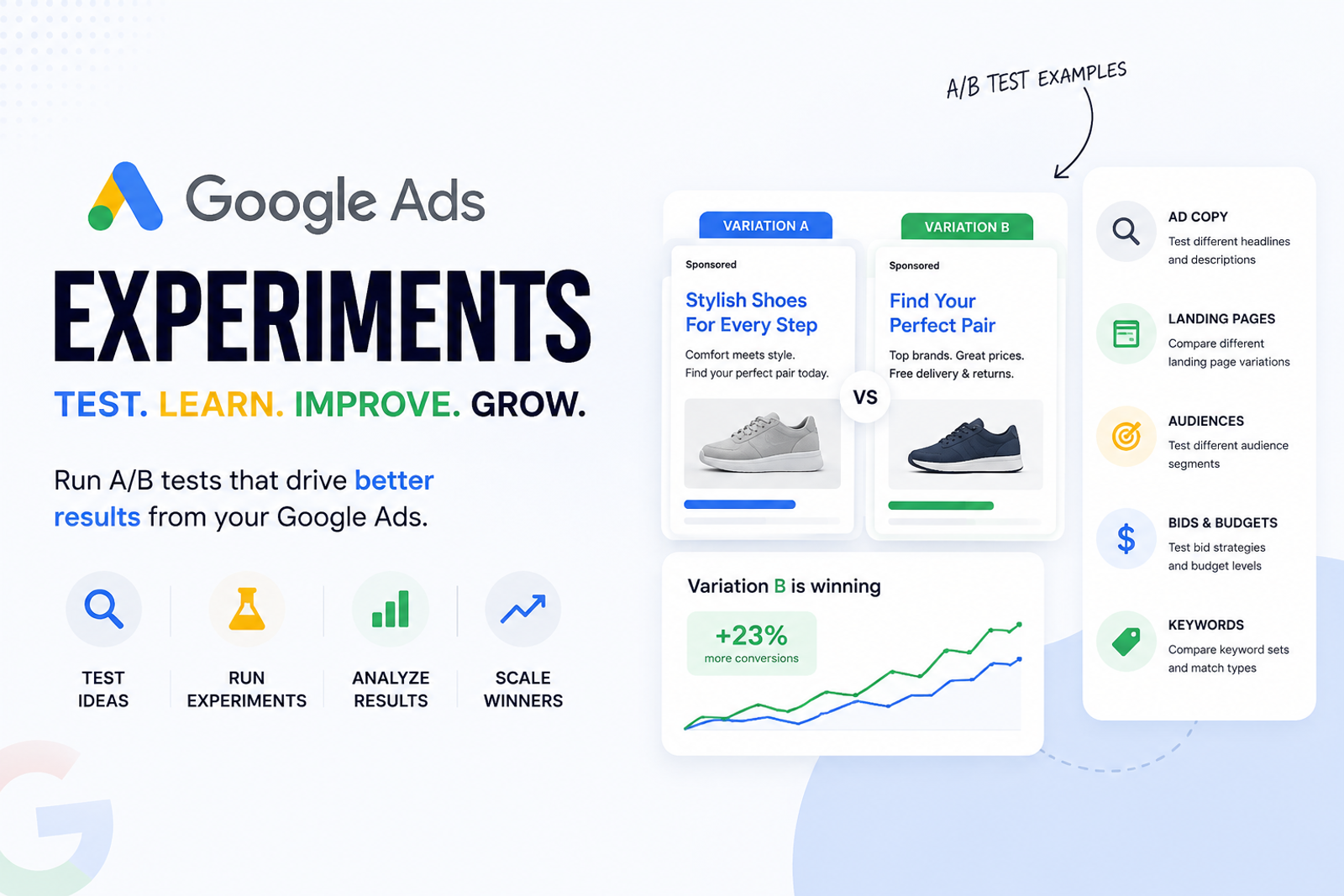
I’m often surprised how little the Google Ads experiment feature is used when I audit client accounts.
Running experiments on your campaigns, bid strategies or ads is the quickest way to show you where you can achieve more performance within your account.
As a quick recap, let’s start with the basics.
What are Google Ads experiments?
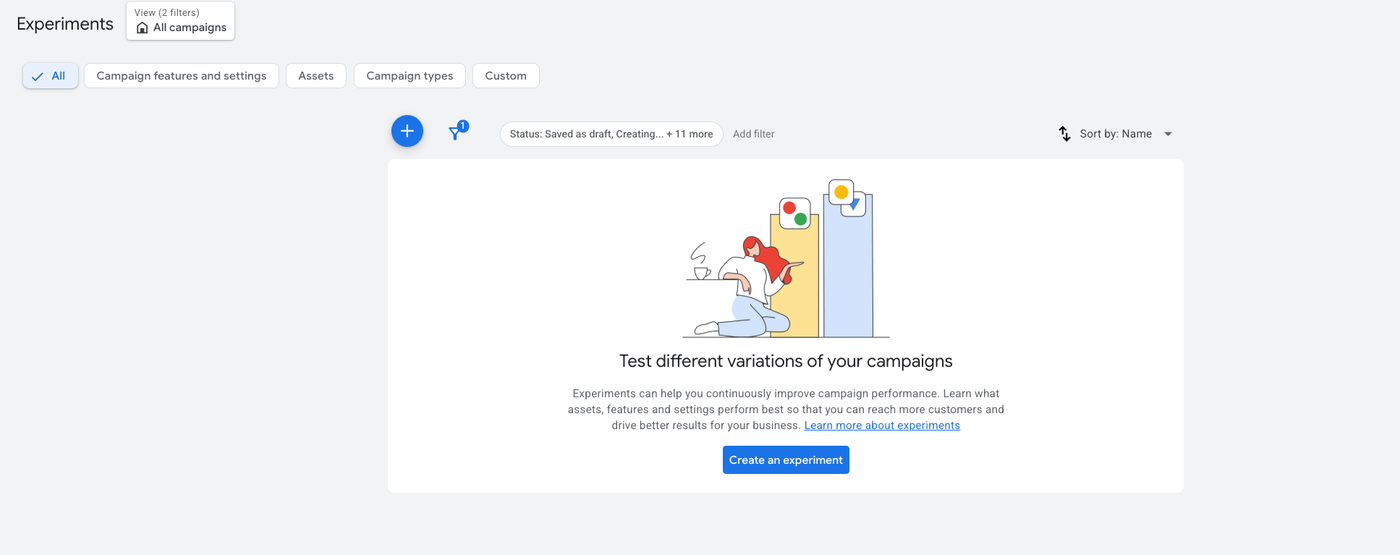
The ad experiments feature is there to help advertisers continually improve performance. You’ll be able to learn what assets, bid strategies and even campaign types perform best.
If there’s one thing I’ve learned during my conversion training at CXL - it’s that top performing companies all have a formal experimentation program. It’s essentially a system where you would rank your experiment ideas (with a methodology such as ICE) and roll them out throughout the year.
At the end of the year, you’ll have incredible insights to report back on and knowledge to understand what has been tested in marketing.
How Google Ads experiments work
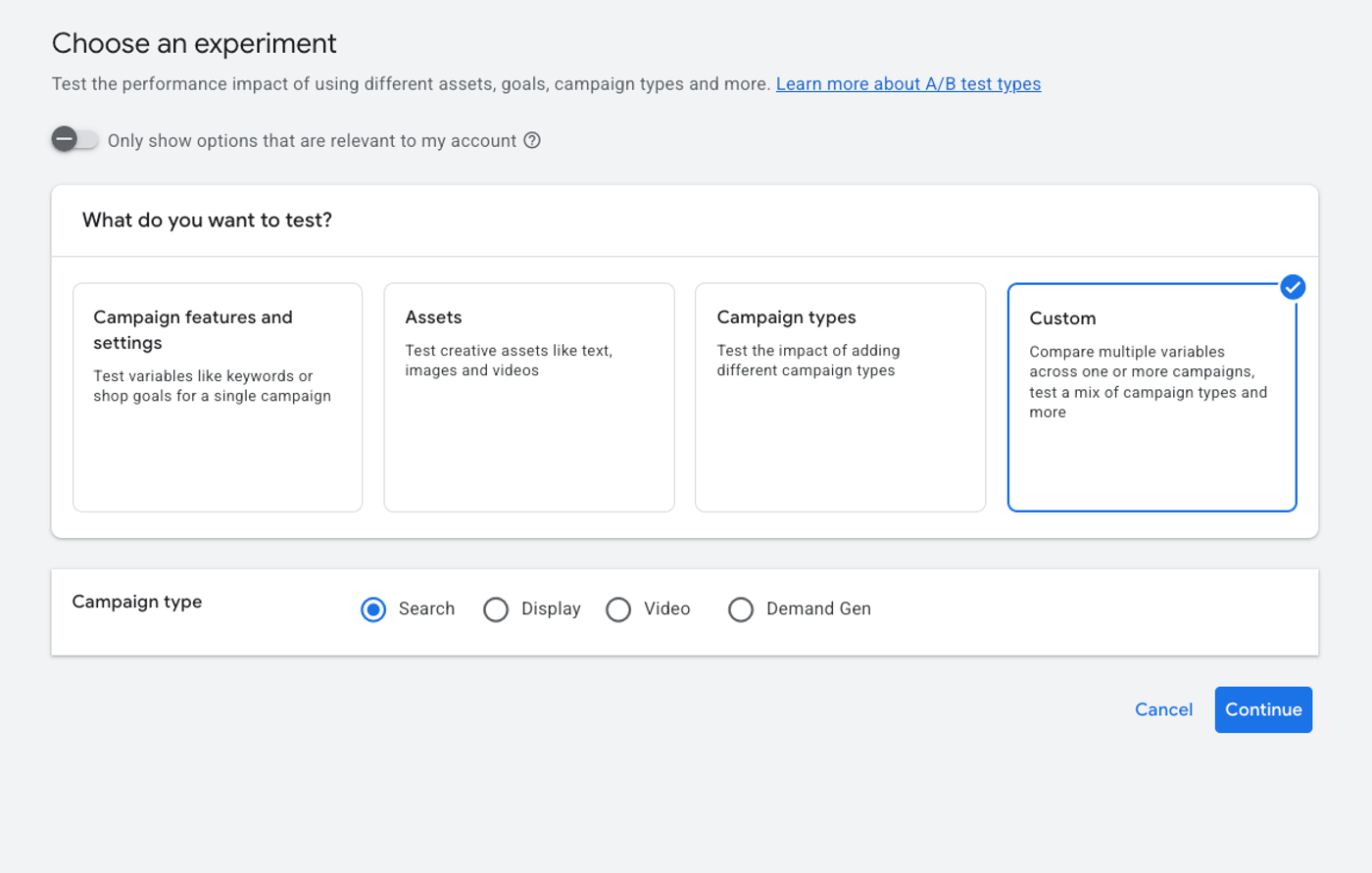
Begin by choosing the type of experiment you would like to run. Note that not all experiment types are available for each campaign type. For example: custom experiments don't have p-max available as a campaign type to test.
What you can test
There are dozens of different elements you can test within your account. Here’s what I recommend you start with:
- Run an A/B test on your brand campaign to determine what bidding strategy is more efficient.
- Run an A/B test for an e-commerce website to determine if a full funnel performance max campaign would outperform a feed only p-max campaign (or vice versa).
- Run an uplift test to see if a performance max campaign will outperform a standard shopping campaign.
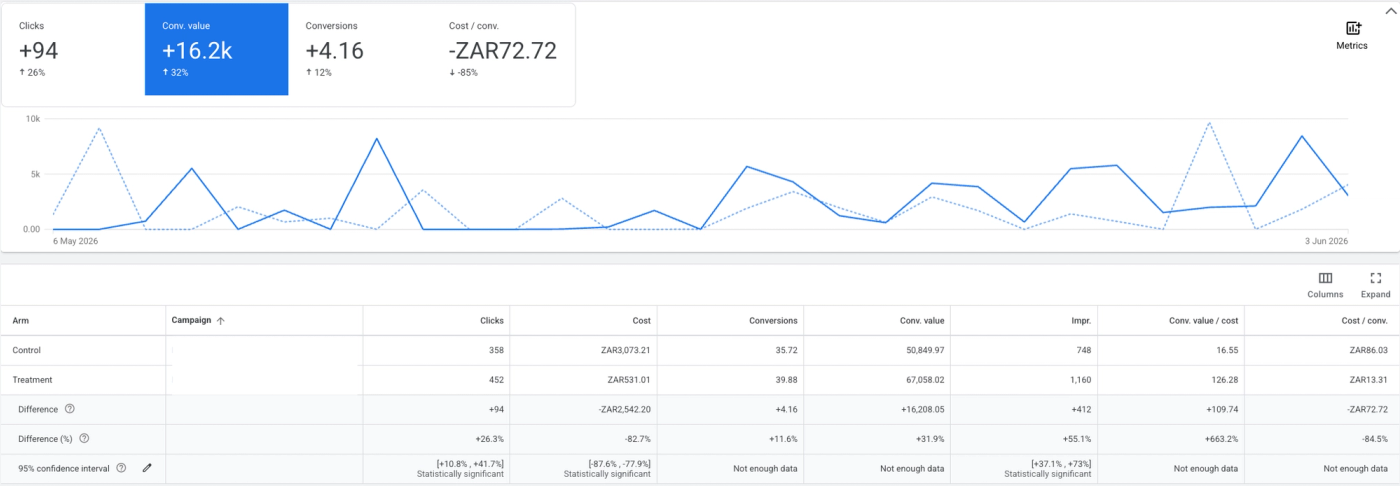
Here’s an example of a bid strategy test I’ve implemented for one of my clients:
How long should a Google Ads experiment run?
The correct answer is, until you achieved statistical significance. You can use an online a/b testing calculator to check if your test has achieved statistical significance. In addition: there’s an indicator within the interface to show you that too.
You do need a large enough sample size - an aim that I was taught years ago was to have at-least 30 conversions before making a decision.
Practically you would want to run a test over a 30 day period and ensure there’s enough data to base a decision on.
Another tip I can give you is to be pragmatic: you can end the experiment ahead of time if you see that the treatment is consistently outperforming the control each day. This applies especially when you’re testing bid strategies.
What happens when a Google Ads experiment ends?
You can create the experiment to automatically switch over to the arm that has won. So by the end of the experiment you would stick with the best version of the test automatically.
What metrics should you evaluate during the test?
For the professional or home services industries where leads are important I would make cost per conversion (specifically cost per lead) the main testing metric.
For e-commerce clients ideally it should be gross profit or revenue.
When testing brand campaigns have a look at average CPC. My own preference is for client accounts not to be paying too much for clicks on their own brand name.
Can you run multiple Google Ads experiments?
If you have multiple campaigns - by all means, run more than 1 experiment. But run them on each campaign individually. I wouldn’t setup multiple experiments of the same campaign.
Conclusion:
You should definitely run more a/b tests if you’re a part of a marketing function. Doing so will allow you to accumulate real knowledge on what elements are driving performance for your business.